Critical Actions Needed to Urgently Address IT Acquisition and Management Challenges
SCALE
-
-
Over $100 billion invested annually in federal IT.
-
-
A large majority of investments support the operation and maintenance of existing IT systems.
-
-
Numerous federal agencies involved, addressing over 20 key reports and recommendations.
-
-
Estimated billions lost due to inefficient project management practices.
COMPLIANCE FOCUS
-
-
21st Century Integrated Digital Experience Act
-
-
Federal IT Acquisition Reform Act
-
-
Office of Management and Budget guidelines
-
-
Federal cybersecurity strategy documents
-
-
GAO’s Quality Assurance Framework
-
-
Recommendations for best practices in IT management
-
-
National strategy characteristics for IT acquisitions
PERFORMANCE ASPECT
-
-
Rationalization of application portfolios leading to potential cost savings
-
-
Enhancements in software application inventory management
-
-
Increased efficiency in IT project implementation
-
-
Improved alignment of IT investments with strategic objectives
-
-
Reduction in redundant applications across federal agencies
-
-
Maximization of resource utilization in IT management
1.
Monitoring
- Requirement
Strengthening oversight and management of IT portfolios (…) These investments often lack disciplined and effective management in areas such as project planning, requirements definition, and program oversight.
Implementing mature IT acquisition and development practices (…) Notwithstanding the billions of dollars spent annually, federal IT investments too frequently fail to deliver capabilities in a timely manner, incur cost overruns, and/or experience schedule slippages while contributing little to mission-related outcomes.
Building federal IT capacity and capabilities (…) AI systems may be trained on data that can change over time, sometimes significantly and unexpectedly, affecting system functionality and trustworthiness. These technological advancements can often cross multiple agencies’ jurisdictions and multiple sectors of the economy. As such, interagency coordination efforts are important to share knowledge to better anticipate and understand the implications of emerging technologies, and to appropriately prevent and manage duplication and overlap.
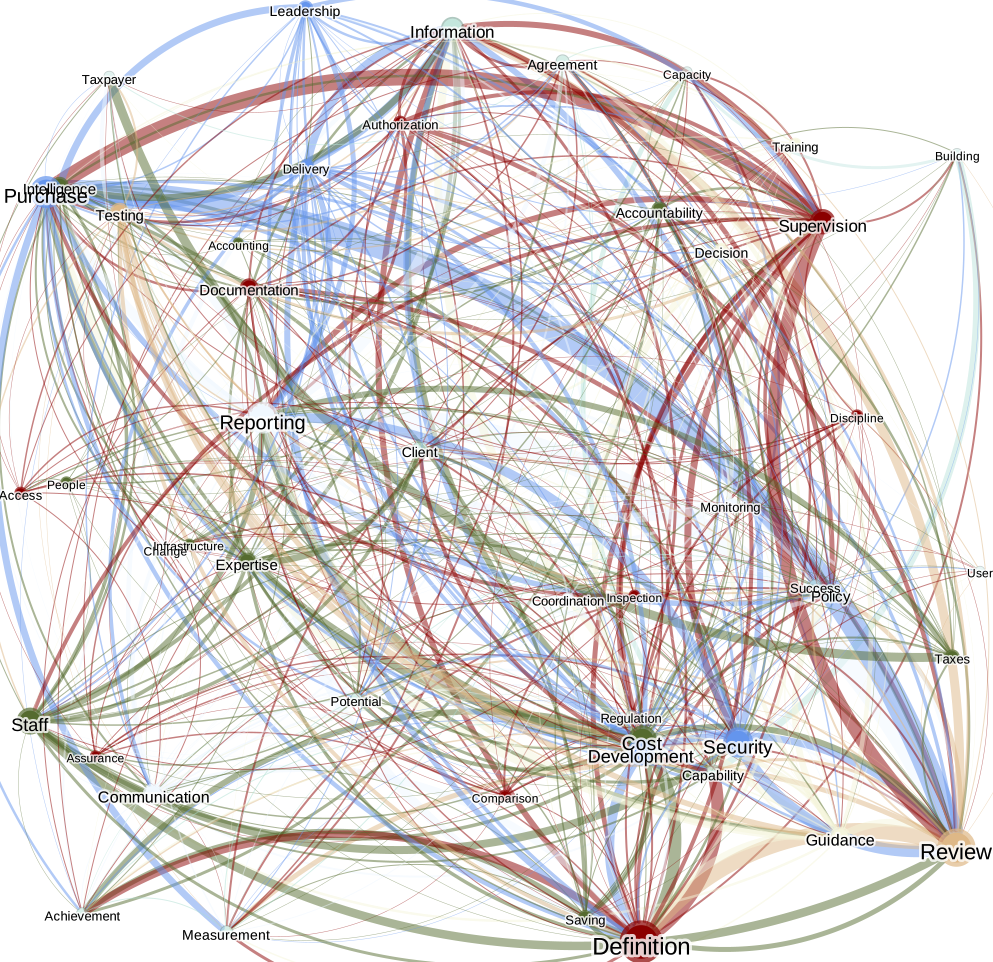
Code (gexf) to continue analysis with GephiTerminology graph